Sand Filtration
Designed to reduce suspended particles and turbidity, helping prepare incoming water for downstream treatment.
RAW WATER→WSF SERIES
Explore WSF Models ↗
Discover the next generation of resin-based, fully automatic water softeners from Water Doctors. Engineered to tackle hard water, help protect your plumbing and make everyday water feel better.
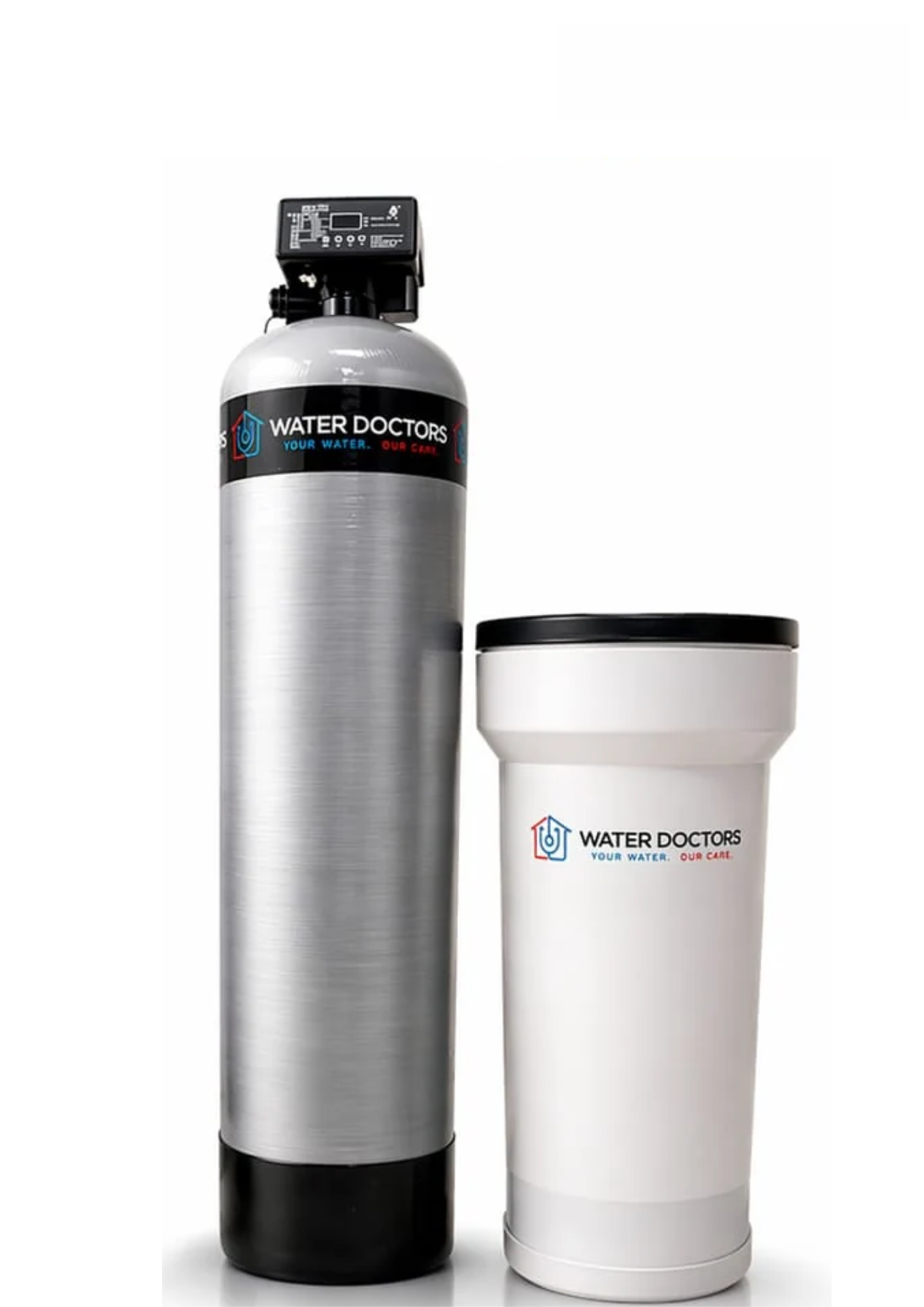
Water Doctors offers resin-based, fully automatic water softeners and complementary sand and activated carbon filtration solutions, manufactured by Brimun India Pvt. Ltd. Our approach is simple: understand your water, select the right treatment sequence and make daily water use more comfortable.
Explore our three core treatment families. Select a model to enquire about its recommended application, sizing and technical specification.
Product photography shows the supplied Water Doctors softener. Filter graphics are conceptual until official product photographs are provided. Model capacity, flow rate and dimensions will be added after technical confirmation.
A complete water treatment plant can combine sand filtration, activated carbon filtration and softening in a coordinated treatment line. The actual configuration depends on your water test and site requirements.
Designed to reduce suspended particles and turbidity, helping prepare incoming water for downstream treatment.
Designed to adsorb certain taste- and odour-causing compounds and other substances, subject to water conditions and media selection.
Ion-exchange resin reduces calcium and magnesium hardness, helping control scale in suitable plumbing and appliances.
See the proposed installation arrangement: water is pumped from the underground sump, treated near the rooftop and supplied to the overhead tank. Select a component to understand its role.
Raw water is collected in the sump. The transfer pump sends water up toward the rooftop treatment area.
Conceptual isometric illustration, not an engineering drawing. Final placement, pump head, pressure, pipe diameter, structural load, bypass, regeneration drain, electrical supply and treatment order must be verified by a qualified installer. Depending on water analysis, some filters may be unnecessary or additional treatment may be required.
Water Doctors softeners use ion-exchange resin. As hard water passes through the resin bed, calcium and magnesium ions are exchanged for sodium ions (or potassium, where appropriately configured). The system periodically regenerates the resin using brine.
Hard water flows through the resin vessel. Hardness minerals attach to the resin while softened water leaves the system.
Hardness comes mainly from dissolved calcium and magnesium. Removing these hardness minerals can help reduce limescale and improve soap performance.
May leave white scale on taps and showerheads, create deposits in heaters and require more soap to achieve the same lather.
Lower hardness can mean less scale buildup, easier lathering and reduced mineral residue on many water-contact surfaces.
Helps reduce hard-water deposits on compatible fixtures and shower fittings.
Soft water can improve detergent performance and reduce mineral residue.
Reducing hardness helps limit scale formation in suitable water heaters and equipment.
Fully automatic systems use a control valve to manage service and programmed regeneration cycles. Exact controls, regeneration triggers and settings depend on the selected WD model and should be confirmed against its technical sheet.
These are Water Doctors softener model designations. Resin volume, service flow, regeneration capacity, dimensions and suitable applications need to be confirmed from the manufacturer's specification sheet before publication.
Sand filters are commonly used to reduce suspended particles and turbidity. Activated carbon filters can reduce certain taste-, odour- and organic-related contaminants. Neither replaces a water softener for hardness removal.
Yes, a rooftop-adjacent arrangement may be possible if pressure, pump head, drainage, electrical supply, load-bearing capacity, maintenance access and local installation requirements are suitable. Treatment should be positioned before the overhead tank inlet if that is the intended design.
No. Softening reduces hardness; it does not by itself disinfect water or remove all contaminants. Drinking-water suitability requires source-water testing and any additional treatment that results indicate.
Share your source-water analysis, hardness, turbidity, daily consumption, peak flow, available space, water pressure and intended use. These determine whether sand filtration, carbon filtration and softening are needed and how they should be sized.
Ask about a WD softener, WSF sand filter, WCF carbon filter or an integrated WTP for your property.
Your Water. Our Care.
Resin-based fully automatic water softeners, sand filters, activated carbon filters and integrated water treatment systems.
Manufactured by Brimun India Pvt. Ltd.
WhatsApp enquiries will activate once your official business number is configured.